


Local Composite Manufacturer: Inventory Ready for 2026 Season
23 April 2026What Is the Real Lifespan of a Composite Deck?
20 May 2026Why is My Composite Decking Peeling?
Understand the causes of delamination in the Canadian climate to make a choice that lasts.
Why Composite Decking Peels: Understanding Your Choice for a Lasting Deck
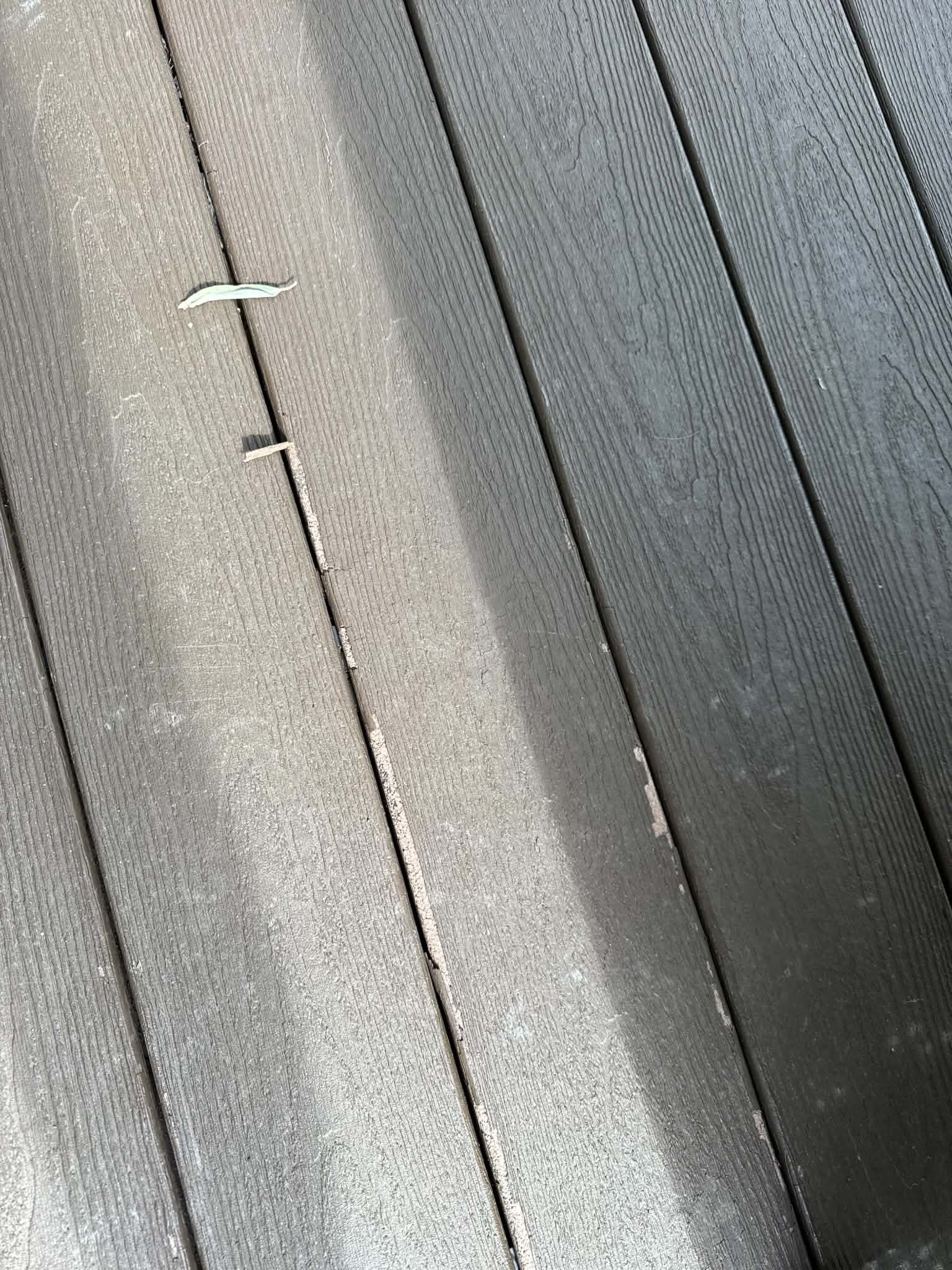
Buying a composite deck is often seen as a "lifetime" investment. We are promised an end to painting, sanding, and rot. However, after just a few Canadian winters, some homeowners are shocked to see their deck surface peeling, flaking, or literally coming apart.
If you are reading this, you’ve likely noticed signs of degradation on your current deck or want to avoid costly mistakes before investing. As a local manufacturer, we often see imported products fail against our climate. Here are the three main reasons composite boards peel and how to make a durable choice.
1. Delamination: The Trap of Cheap "Capping"
The most common cause of "peeling" boards is a phenomenon called delamination. To reduce costs, many manufacturers use a low-density composite core covered with a thin plastic protective film (known as a "cap" or shell).
The Technical Issue
In low-quality products, this film is simply glued or pressed onto the core. In Canada, our decks face brutal thermal shocks, swinging from -40°C to +40°C. These two materials (the core and the shell) do not expand at the same rate. Over time, the tension breaks the adhesive bond. Moisture then seeps between the two layers, freezes in winter, and eventually causes the protective film to pop or flake off.
The Écoplast Solution
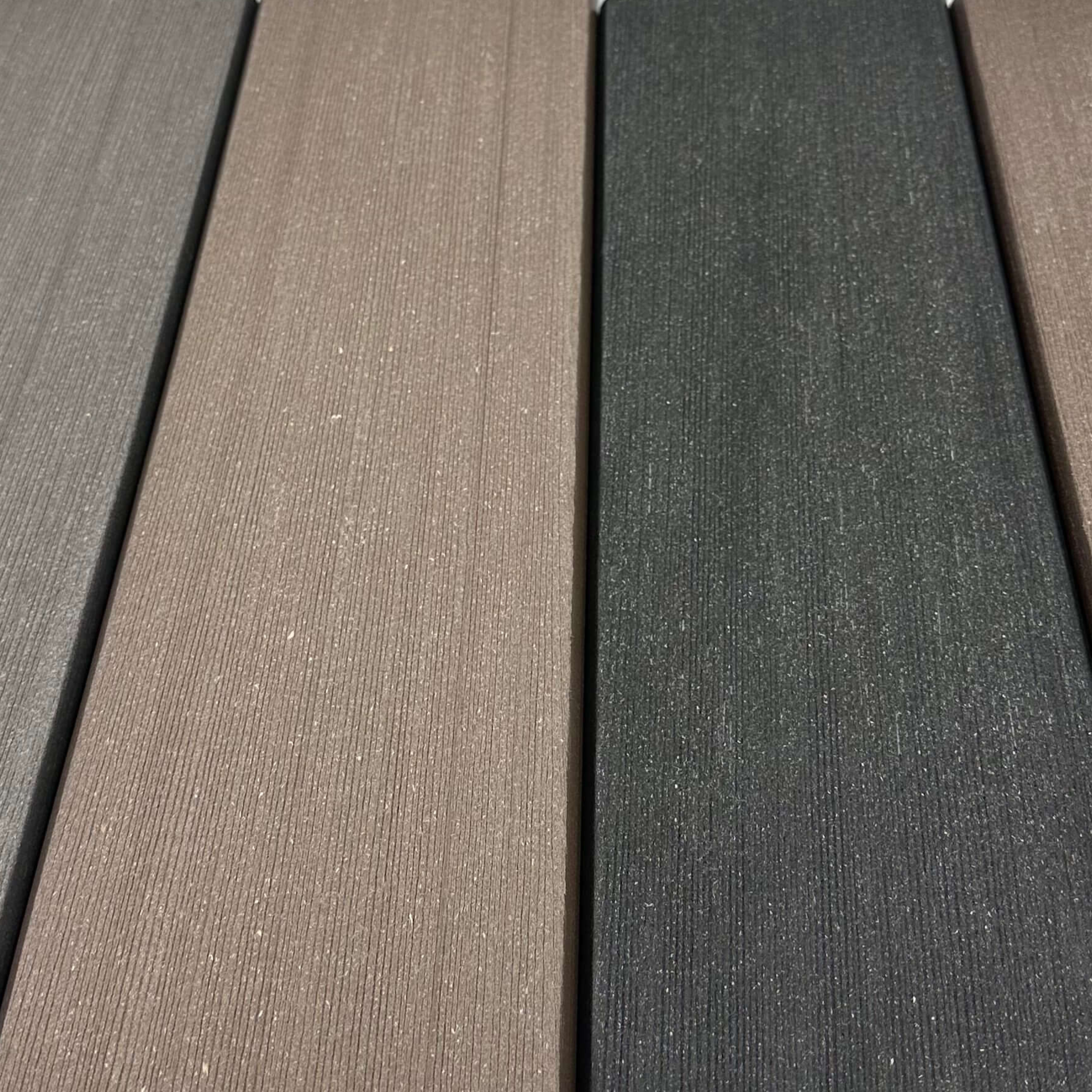
Unlike mass-produced imports, our boards are engineered with high-pressure fusion or a homogeneous composition. There is no film that can detach because the protection is integrated or molecularly fused into the board's structure.
2. Thermal Expansion and Warping
It is a common myth that composite is inert like plastic, but it actually "moves" more than wood. A 16-foot board can grow or shrink by more than a quarter-inch depending on the temperature.
Why It Looks Like It’s "Peeling"
If the installer didn't leave the required expansion gaps or used improper fasteners, the board has nowhere to go when it expands under the July sun. It will then "bow" or warp. This force is so powerful it can rip out screws or pop fastener clips. To a homeowner, the visual effect looks like the board is detaching or peeling away from the joist.
The Manufacturer’s Edge
By buying from a local manufacturer, you get installation guides specifically adapted to the extreme temperature swings of our region. We recommend hidden fastening systems that allow the board to "slide" slightly, avoiding the tensions that lead to lifting or buckling.
3. Trapped Moisture in Hollow Core Boards
There are two main types of profiles on the market: solid boards and hollow boards (which have "tunnels" inside to save on material).
The Danger of Hollow Boards
Hollow boards are extremely sensitive to condensation. If moisture enters the internal chambers and cannot escape, it freezes during winter. The expansion of the ice pushes against the internal walls of the board, eventually creating structural cracks or causing the finish layer to peel away. Once the structure is compromised, the board becomes spongy and rots from the inside out.
Why Choose a Solid Profile?
At Écoplast, we prioritize solid profiles. While slightly heavier to handle, they are virtually indestructible against moisture. There are no cavities to trap water, ensuring your deck stays straight and solid for the next 25 years.
How to Choose a Board That Will Never Peel
To avoid replacing your deck in five years, ask your supplier these three questions:
-
Is the board solid or hollow? (Choose solid).
-
How is the protective layer attached? (Look for thermal fusion, not gluing).
-
Is the product tested for the Canadian climate? (Products designed for warmer climates often fail here).
Conclusion: Comfort Without Compromise
Investing in a composite deck is a smart decision, provided you choose the right technology. By opting for a product manufactured locally from high-density recycled materials, you are making an eco-friendly choice that won’t peel, flake, or require any maintenance.
Ready to switch to high-density WPC?
Whether it is for a residential project or a large commercial order, our experts are here to advise you on the best solution.
Local manufacturer in Farnham | Shipping across Québec and Ontario (including Kingston region).
Is your composite deck peeling or flaking? Discover why the Canadian climate affects low-end composite and how to choose a durable, guaranteed board.
