


Luxury Composite Decking in Lorraine
10 September 2025Screws vs. Hidden Fasteners
28 January 2026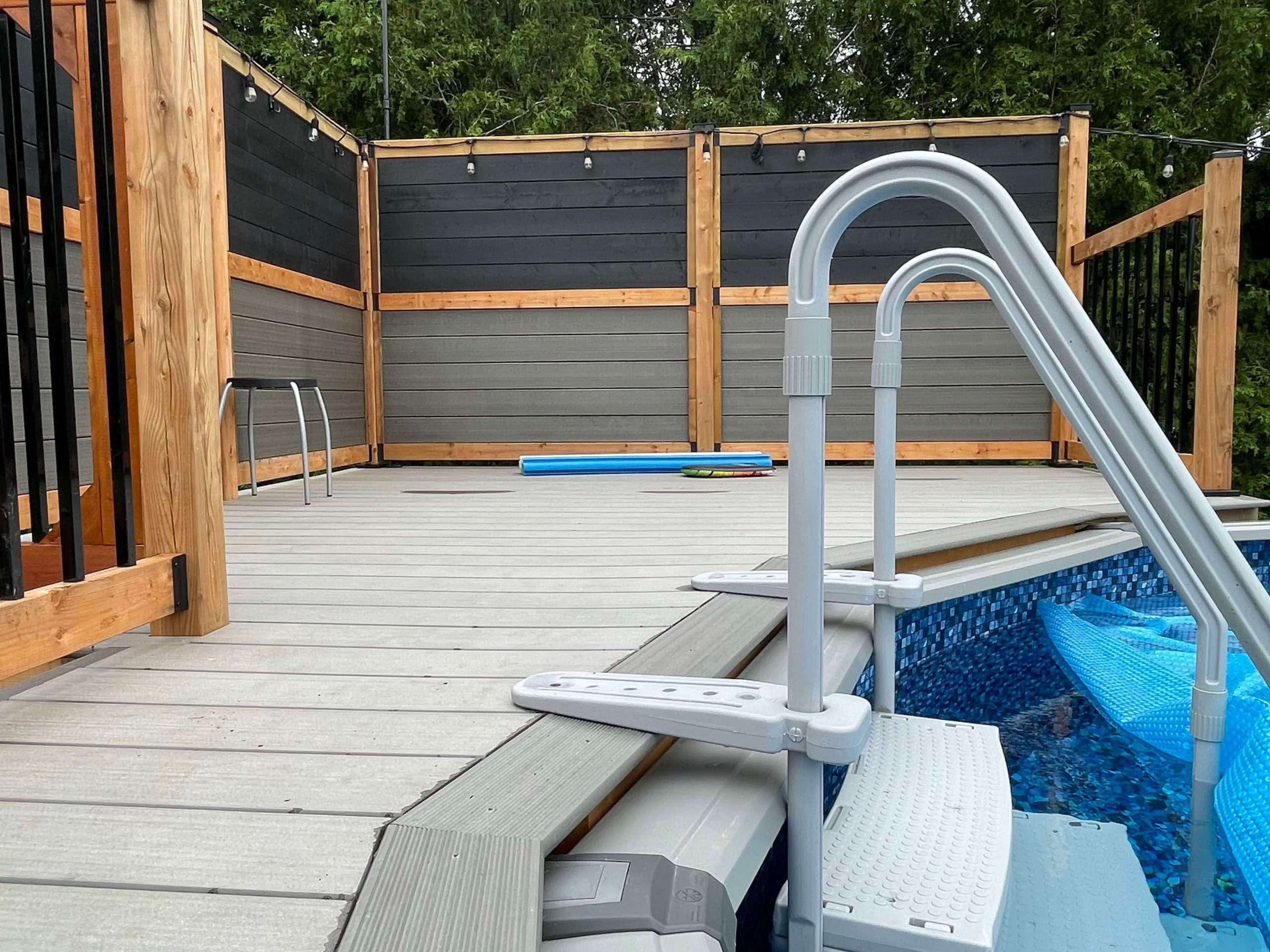
5 Common Myths About Composite Decking Debunked
Introduction
Many homeowners and contractors are hesitant to switch to composite decking due to outdated information or experiences with low-quality "capped" products. At Ecoplast, we believe in transparency backed by engineering. It’s time to separate fact from fiction and discover why our unique non-capped, wood-HDPE blend is redefining the industry standards for performance and aesthetics.
| The Myth | The Ecoplast Reality (Non-Capped Advantage) |
|---|---|
| "Composite gets too hot to walk on." | Natural Cooling: Our non-capped blend contains real wood fibers that naturally dissipate heat and reduce absorption compared to plastic-heavy capped boards. |
| "It looks like shiny, cheap plastic." | Matte Finish: The absence of a plastic "shell" (cap) allows for a deep, matte wood texture that feels and looks like authentic timber, not PVC. |
| "100% plastic is better for the planet." | Carbon Neutral: We use 100% recycled HDPE combined with wood fibers, a carbon-neutral material that offers a much lower environmental footprint than pure plastic products. |
| "Composite is slippery when wet." | Engineered Traction: Our wood-HDPE surface provides a natural grip, certified at 66.3 COF—superior to most stained traditional wood decks. |
| "It requires specialized chemicals." | Pure Simplicity: Because our boards are engineered for durability, they require no toxic sealants or stains—just a simple periodic rinse. |
Myth 1: "Composite Decking is too hot for bare feet"
It’s a common complaint: "I can’t walk on my deck in July." This is largely true for capped composite. Capped boards are wrapped in a thick plastic shell that acts like a greenhouse, trapping heat and reflecting it back to the surface.
The Ecoplast Reality: Because our boards are non-capped, the real wood fibers are integrated throughout the entire profile. Wood is a natural insulator. Our blend allows the board to "breathe" and dissipate heat much faster than a plastic-wrapped competitor. Whether you’re in a tropical resort or a sunny backyard, our technology keeps the surface temperature significantly more comfortable.
Myth 2: "It looks like shiny, cheap plastic"
First-generation composites and many modern capped products have a distinct "plastic sheen" that looks artificial under direct sunlight.
The Ecoplast Reality: Our non-capped manufacturing process preserves the organic, matte finish of the material. By exposing the wood-polymer matrix, we achieve a high-definition grain and a texture that mimics authentic timber. It doesn't just look like wood; it feels like it, providing a premium aesthetic that ages gracefully without the "glossy" look of PVC.
Myth 3: "All composite is bad for the environment"
Some believe that mixing materials makes them impossible to recycle or that the carbon footprint is too high.
The Ecoplast Reality: Sustainability is the core of our DNA. We use 100% recycled HDPE (High-Density Polyethylene), diverting thousands of tons of plastic from landfills. But the real secret is our wood fiber. Wood is a carbon-neutral material. By combining recycled plastic with natural fibers, we create a product with a much lower environmental impact than 100% synthetic PVC decks. Choosing Ecoplast is a vote for a circular economy.
Myth 4: "Composite is slippery, especially near pools"
The fear of a "slick" surface when wet is a major concern for families and commercial developers.
The Ecoplast Reality: Slip resistance comes down to the Coefficient of Friction (COF). While capped plastic can be slippery, our exposed wood-fiber surface provides natural traction. As proven in our University of Sherbrooke testing, Ecoplast boards achieved a 66.3 COF rating, ensuring a safe, high-grip surface for pool decks, marinas, and rainy climates.
Myth 5: "It’s too expensive compared to wood"
Many look only at the initial purchase price, failing to see the "hidden" costs of traditional wood.
The Ecoplast Reality: A pressure-treated wood deck requires sanding, staining, and sealing every 2 years. When you factor in the cost of materials and labor over a 5-to-10-year period, wood becomes significantly more expensive. Ecoplast is a one-time investment. No rot, no splinters, and no chemical stains—just a beautiful deck that pays for itself through zero-maintenance savings.
Conclusion
Don't let myths dictate the quality of your outdoor living space. By choosing a non-capped, carbon-neutral, and scientifically tested product, you are choosing longevity and peace of mind.
Don't Let Myths Stop Your Project
Now that you know the facts, see the quality for yourself. Order a sample kit or speak with one of our specialists to discuss your project requirements.
Is composite decking too hot? Does it look like plastic? We debunk the 5 most Common Myths about composite boards using engineering facts and real-world performance.
