


Planning Your Deck Budget: Cost Factors for Composite Decking
10 June 2024Why Buy Local? The Benefits of Choosing a Canadian Decking Manufacturer
2 February 2025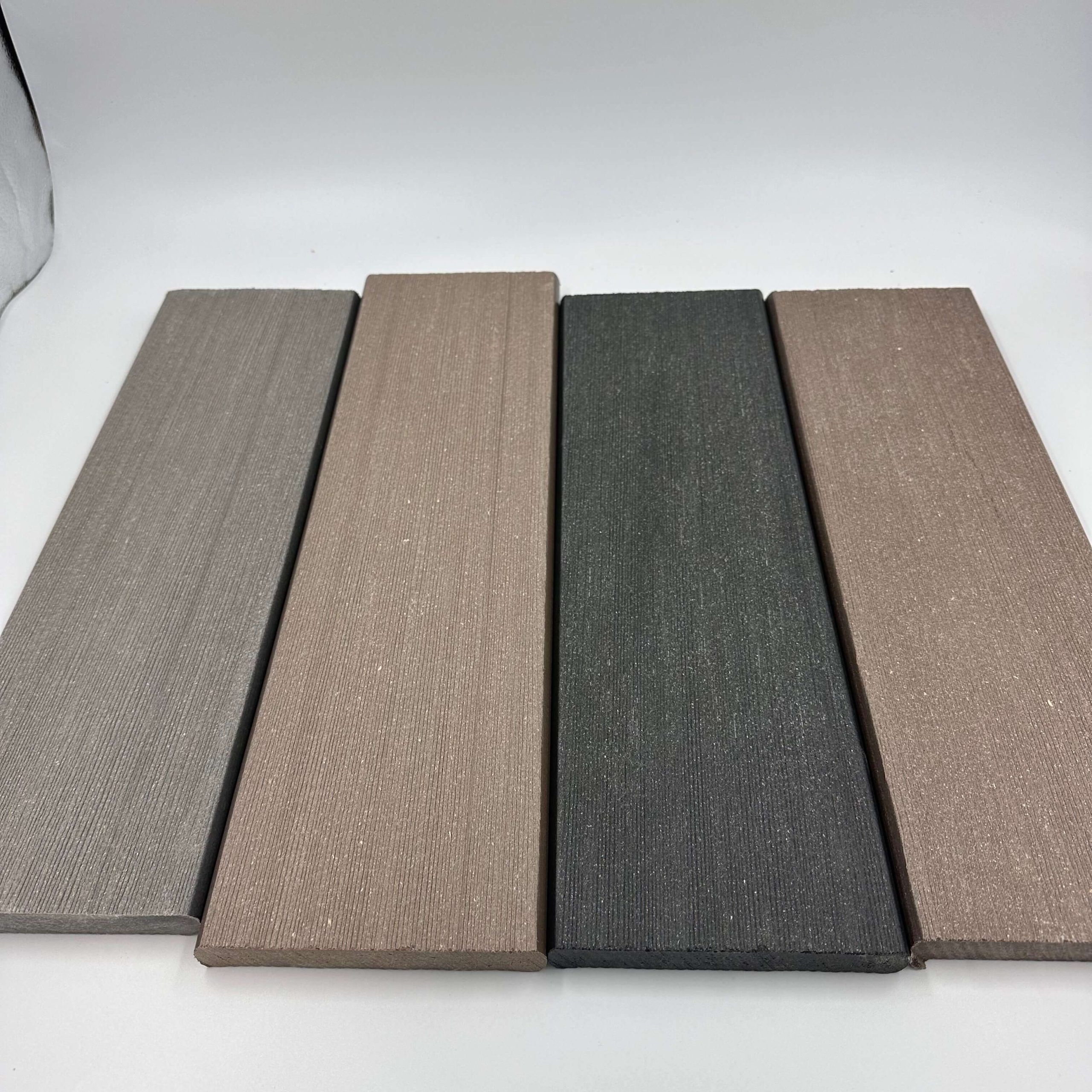
Capped vs. Non-Capped Composite Decking: Which is Best for Your Climate?
| Feature / Benefit | Non-Capped (Classic) | Capped (Shield) |
|---|---|---|
| UV & Fade Resistance | High (Natural Aging) | Ultimate (SPF 100 Barrier) |
| Stain Resistance | Good (Porous) | Superior (Non-Porous) |
| Structural Strength | High Structural Integrity | High Structural Integrity |
| Maintenance | Standard Cleaning | Ultra-Low Maintenance |
| Recommended Use | Standard Residential | Tropical, Marine & High-Traffic |
1. Introduction: The Protection Layer
In the world of composite decking, the term "Capping" refers to a high-tech polymer shield co-extruded onto the core of the plank. While both options offer the sustainability of 100% recycled HDPE, the choice between them determines how your deck will age over the next 25 years.
2. What is Non-Capped Composite? (The Authentic Choice)
Non-capped boards are consistent throughout. They offer a uniform look and high structural integrity.
-
Pros: Highly durable, cost-effective, and provides a very natural, matte wood-like aesthetic.
-
Best for: Projects where budget is a priority and in environments with lower exposure to heavy staining agents (like grease or wine).
3. What is Capped Composite? (The Ultimate Shield)
Capped composite features an extra layer of protection that acts like "SPF 100" for your deck. At Ecoplast, our capped boards are engineered to resist the most aggressive elements.
-
Pros: Virtually stain-proof, fade-resistant, and 100% moisture-resistant.
-
The Tropical Advantage: This is the gold standard for Mexico and the Caribbean. The cap prevents UV rays from degrading the color and stops humidity from penetrating the core.
4. Technical Performance: The Ecoplast Difference
Unlike many competitors, our boards (both capped and non-capped) are tested for extreme conditions.
-
Strength: Our proprietary blend achieves a flexural strength of 34.4 MPa (tested by the University of Sherbrooke).
-
Safety: A certified 66.3 COF (Coefficient of Friction) ensures a slip-resistant surface, even when wet.
5. Conclusion: Making the Right Choice
-
Choose Capped if you are building near the ocean, in high-humidity areas, or near a BBQ/Pool where spills are frequent.
-
Choose Non-Capped for a robust, eco-friendly, and budget-conscious alternative in stable climates.
Ready to build for the next 25 years?
Whether you are planning a residential deck in Canada or a commercial resort in Mexico, our 34.4 MPa certified composite is engineered to perform.
Learn the difference between Capped and Non-Capped composite decking. Compare durability, UV resistance, and maintenance to choose the best boards for Canadian or Tropical climates.
